Pages

Monday, September 2, 2019

What a great first week!

Boy oh boy have we been busy!  It's true!  This past week was our first full week, so why not start diving in to the curriculum!

Upcoming blog posts will be laid out by content.  You can read about each subject we are covering.  I will talk about what we are learning and include some helpful hints on how to help your child at home.

Math:
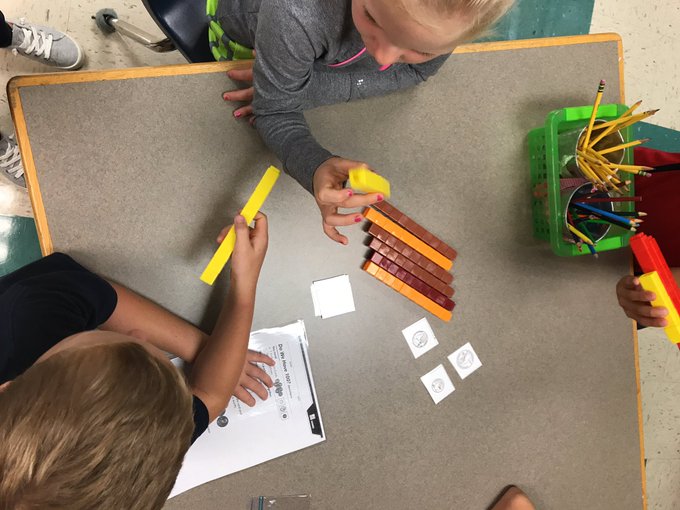
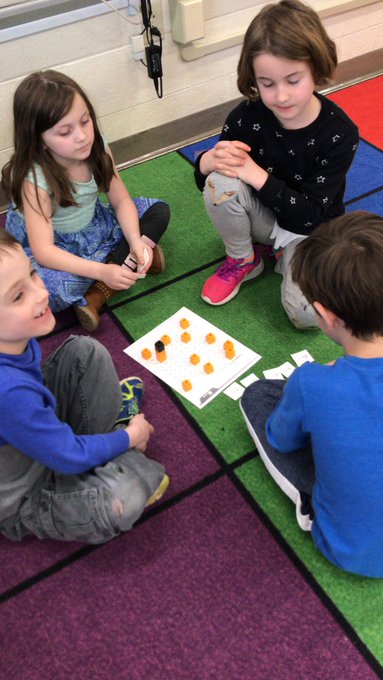
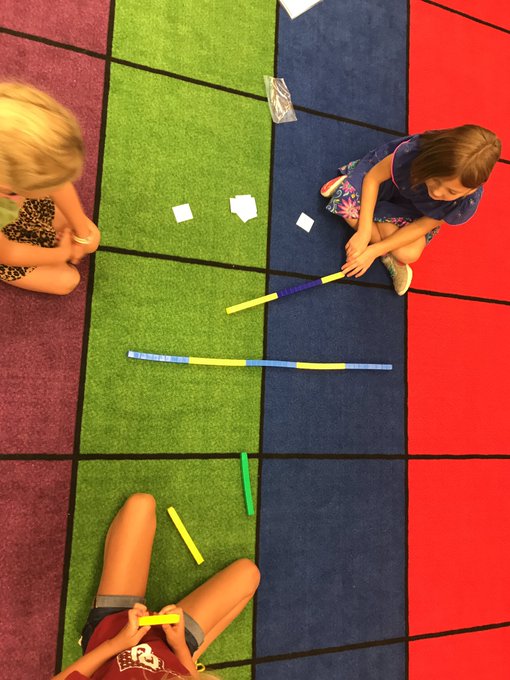
The first unit of study is simply seeing what they know, reviewing helpful tools (hundreds chart, number line, etc), introducing games, and simply understanding how the math period will flow.  This past week, we used the hundreds chart to count AND solve simple addition and subtraction problems, began skip counting, identified and counted coins, and solved simple word problems together.  Our biggest focus was making sure students could count 100 objects.  We talked about different strategies, such as counting by twos and placing them in groups of 10 so that anytime I walked up and asked how many they had counted, they would easily be able to tell me.  We used colored cubes so they could count ten of each color, as in the pictures below.  We also reviewed the identification of coins, their value, and counting them (using cubes as a backup counter).  Most students were able to do both of these tasks, but it doesn't hurt to practice.  Below are ways to help your child grow as mathematicians. 
 View image on Twitter    View image on Twitter

Ways to help at home:
- Pull out 100+ pennies or beans or... and ask your child to count them.  Students should remember to place them in groups of 5 or 10 so they can easily figure out what number they are on should they get confused.
- Ask your child to identify different coins, count a handful of change, and make $1.00 with different coins.


Word Study:
We have begun the year with one word list for all students, which are sight words.  Students learned the structure of this time, as well as my expectations in their journals.  We will continue the upcoming week with a new sight word list and add to our activity set and my expectations for those activities.

Ways to help at home:
- Ask your child to spell easy, commonly used words when you are writing a note or a list.  Remember that words we think are easy (like was or one or what) can be challenging for them because some words don't sound like they are spelled...was sounds like it should be spelled wuz.  Choose words that can easily be sounded out.
- I will be teaching students a strategy for harder words using lines.  For instance, if we spelled sneaky, I would ask students to count the sounds (5), so we draw 5 lines, like this _ _ _ _ _.  Then we begin filling in the lines with the sounds we heard.

s _ _ _ _ then
s n _ _ _ then
s n e _ _  then
s n e k _ then
s n e k e

I explain that this might not be exactly how to spell the word, but it would be super close!  From this point, students can then use what they know from word study to get even closer.  If they have had the long e sort with ea, then they know they could put an ea on the third line.  If they know that some long e sounds at the end of a word will end with an i, ie or y.  They can then add them and see which one looks familiar.  Ask your child to use this strategy at home.  We are just learning it, but as the year progresses, students will become very good at it.


Writing:
We began the year with a drawing prepared by each student at the table.  Each student got a piece of paper and drew legs (some drew 8 legs!).  We then rotated the paper to a new person and that person drew the body.  We then rotated again and that person drew the head (one person had 4 heads!), and the last person drew arms.  The paper was then returned to the original owner who added details and began writing about it.

Writing this week will include reading books and making lists of "things to write about" for idea generation.  Students will make a list of who they could write about, places they could write about, favorite things they could write about, and experiences they could write about.  We will read books that use these components and then I will use my list to create a true story about a time my daughter and I were snorkeling in Kauai and saw a Hawaiian Monk Seal and a completely fictional story about a green monkey (my favorite animal) who photo bombed a wedding at a temple outside Tokyo (a place I visited).  Students will then be able to explore how their own experiences can help them write a wonderful story. 

Ways to help at home:
Students can write at home.  They could help you with the grocery list, write a letter to family or friends, or just write a creative story.  There are two great apps you can get for your phone (Name Dice and Story Dice by Thinkamingo) that will help when they are stuck.  The Name Dice pops up 2 names at a time and the Story Dice shows 2 or 3 pictures that generate a "situation" that students can write about.  I only allow students to tap it 3 times for ideas or they might get carried away with tapping and not actually thinking about what the picture on the dice could do for their story.


Reading:
We began this week by learning to choose a "just right" book. We watched a short video on the story of Goldilocks and how she needed to have "just right" porridge, a "just right" chair, and a "just right" bed.  Reading is very similar because we can't have books that are too hard or we might get bored with those that are too easy.  We have to find "just right" books as well.  We talked about finding books that are of interest, that they can comprehend, and that they know how to read.  At this time, students are only allowed to choose books from certain bins (easier books).  I will open up other bins and genres after I am able to more formally assess them.  I already know a few students who are either above or below the bins that are available to students, so my hope is to assess those students first so they can get into more "just right" books quickly and don't get bored or frustrated.

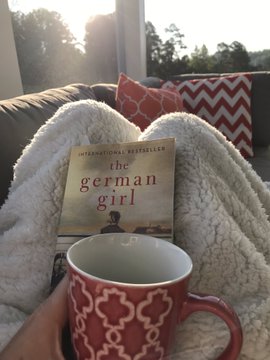
This week, students were asked to think of themselves as readers (how do they like to read, with whom do they like to read, and who are model readers they want to be like).  Students answered a survey, drew pictures, and wrote about their reflection as a reader.  I told students that I love to hike and read and combining those two things make me happy, so my favorite place to read is near a waterfall!  So, we listened to a YouTube channel with waterfall and bird sounds.  They gave me a big thumbs up! :)  Here is my new favorite place to read on a Saturday morning (my new back porch).
 View image on Twitter

We spent quite a bit of time talking and reflecting on reading and were able to make it about 9 minutes of straight reading before several students got bored and started looking around.  At that time, we moved around and started again.  Eventually, students will get to the point where they can read for 30-40 minutes straight and will get cranky when I tell them it's time to clean up!  :)

Ways to help at home:
- The hardest part about reading at home is that you don't know if a book is a "just right" book.  If your child has a book that you aren't sure is a good fit, ask them to read a page or two to you.  If there are more than 5 words that your child does not know, the book is "too big."  If your child can read it, but doesn't really know what it means, it is only a little "too big."  Either have them choose a different book or read along with them and ask them questions.
- Don't feel that your child is ever too old to read a book together.  Children learn through your modeling!  Have your child read to you, share the book and each of you read a page, or you read to your child if the book is "too big."  All of these are wonderful ways to spend quality time with your child.
- 20 minutes of reading each day will help immensely!  This will be their homework for the remainder of the year.

Social Studies:
In social studies, we discussed ways to be a super citizen.  This even broadened this topic through other content areas this week (being a super citizen in reading and writing workshop)!  Students were able to clearly explain how they could be a super citizen of our classroom community, school community, city community, national community, and global community.

Students were able to clearly distinguish the difference between rules and laws.  They know rules are made by groups of people and each person is held accountable on their own, but laws are made and upheld by the government.  Students provided examples of rules (being respectful, following directions, etc) and laws (obeying the speed limit and not stealing).  FYI - we went the simple route and didn't get into inappropriate laws!  :)

Ways to help at home:
- When taking a family walk, pick up trash and talk about how super citizens help the community become a better place to live, work and play.
- If you are driving, discuss the different laws you have to obey (stopping at a stop sign, driving the speed limit, etc.)


Monday, April 8, 2019

Welcome Back!

What a great end to the third quarter!  Can you believe we only have 9 weeks of school left before your children are 3rd graders?  WOW!  In the meantime, we will be busy!

View image on Twitter  View image on Twitter    View image on Twitter

View image on Twitter  View image on Twitter  


Social Studies/Science:
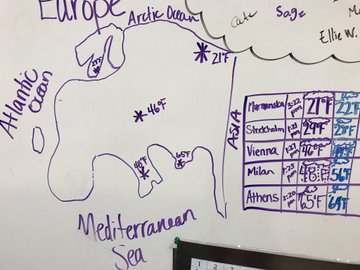
We continue to work with Ms. Carew's class for our continents and oceans unit.  We track the weather in approximately 5 cities/countries on each continent for three days, discuss time zones, explore the amount of sunlight to determine the seasons, look at maps to identify oceans all around each continent, discuss plants and animals on each continent, and explore the different cultures within each continent.  Students are getting very good at predicting time and temperature!

View image on Twitter

View image on Twitter  View image on Twitter

A friend of mine went to Antarctica a year ago, so we will be video conferencing with her to hear her thoughts, ask questions, and even see her warm coat and her husband's HUGE boots (size 17!) that took up an entire suitcase.

Ways to help at home:
- Find books or videos on continents or oceans.
- Have your child tell you all they know about the continent we have been studying.
- Create a story that takes place on a continent we have studied.


Word Study:
Students continue to participate in word study each day. We will continue with word study throughout the last quarter.  I have spoken with many parents about sending word study home for summer work.  If I have not talked with you about this and you are interested, let me know and I will be sure to send it home based on where we leave off at the end of the year.


Writing:
Students continue to write different stories about their lives or fictional stories using pictures to help them develop their story.  We are just finishing a fun story where students write about a character and TWO setting... the reader gets to choose which setting they want the character to be in.  Students then write one problem, but two different solutions to that story and the reader chooses which ending they want to read! 

We will begin writing poetry next week!  I am so excited to give them a chance to explore a new writing style to spark more of their creativity. 

Ways to help at home:
- All students should continue working on capitalization and punctuation within sentences.
- Give them a question to respond to in one paragraph.
- Write a rhyming poem!


Reading:
Students continue to read for approximately 40 minutes in class each day.  At times, they read to me, read to a partner, or read independently.  We continue to work on comprehension strategies.

Students have been reading non-fiction books and are able to identify the text features, such as bold print, headings, a table of contents, a glossary, photographs and captions.  Students are able to tell why the text features are so important to them as a reader.  Ask your child to point out a non-fiction text feature!

We will review reading with prosody (expression, intonation, character voices, etc.) with our poetry unit.  Students will "perform" for classmates once they've had a chance to practice.  As you know, practice makes perfect!

Ways to help at home:
- As always, continue to have your child read between 20-30 minutes per day.
- Make predictions using events in your book and your schema.
- Read and reread poetry to improve prosody and build confidence!

View image on Twitter  View image on Twitter 

Math:
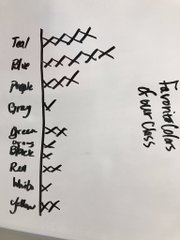
Students learned about three different types of graphs.  They learned about bar graphs, line plots, and pictographs.  Students came up with a question they wanted to know about their peers.  Next, they collected data, placed it in a chart, and then made graphs with the data.  They loved this!

Here are a few we did together...

 View image on Twitter  View image on Twitter  View image on Twitter 

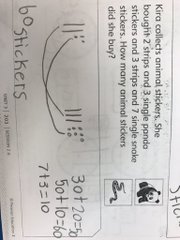
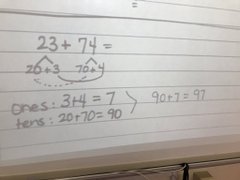
We continue to add larger numbers and discuss different strategies students use.  I believe the discussions are helpful for most students so they can find a strategy that works best for them.  Students use blocks, number lines and the expanded strategy to help them solve problems.  Here are a few examples...
View image on Twitter    View image on Twitter    View image on Twitter

View image on Twitter  View image on Twitter  View image on Twitter 
  
Ways to help at home:
- Ask your child how to play Collect $1.00!
- Continue to work with your child on telling time (we have been working on time to 5 minutes) and counting money.
- Continue to allow your child to work on ST Math at home, which will greatly build their number sense!
- Not many students are using Reflex Math, so please don't forget to build fact fluency at home.

Monday, January 28, 2019

Boy are we busy!

Although it has been over a month since we've had a full week of school, I feel that students are right on track and have kept most of their reading stamina and knowledge, as well as their math understanding.  Thank you to parents for continuing all of our hard work at home over the break and on snow days!

Fun times and projects:

 View image on Twitter

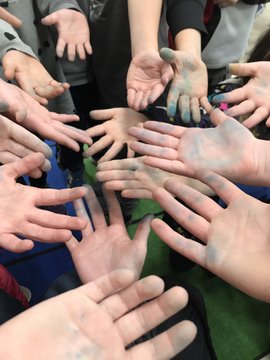
You know you've worked on something fun when you have grody fingers! 

View image on Twitter  View image on Twitter  View image on Twitter  View image on Twitter  View image on Twitter  View image on Twitter 

View image on Twitter  View image on Twitter  View image on Twitter 

View image on Twitter  View image on Twitter  View image on Twitter  View image on Twitter  View image on Twitter


View image on Twitter  View image on Twitter

Social Studies:
Students are taking all that they know about the United States and using it to understand the American Indians.  So far, they have spent time with me learning about the Lakota tribe.  They learned about the Lakota tribe through videos and pictures.  They have learned that the Lakota tribe lived in the Plains, near Wyoming and the Dakotas.  Buffalo was the main food for the Lakota people.  The Lakota tribe lived in tepees because they were easy to take down and move to a new location because they followed the buffalo!  They are finishing their time learning about the Pueblo tribe with Mrs. Hartman.  The Pueblo tribe was located in the Southwest.  They used the mud and warm sun to create clay pots.  Check your child's backpack for their beautiful pots.  Next week, students will go to Mr. Foreman to learn about the Powhatan tribe.  By the end of the unit, students will know the difference between the three tribes in the areas of location, food, shelter, and transportation.

View image on Twitter  View image on Twitter  View image on Twitter  View image on Twitter  View image on Twitter 

Ways to help at home:
- Find books or videos on the American Indians.  Make a tepee (when Bree was in 2nd grade, she begged us to make a tepee!) or pick berries in the wild.  This summer, grow beans (a popular crop of the Powhatan tribe) or maize (aka corn!). 


Word Study:
Students continue to sort their words with me.  We spend a great deal of time talking about the sort and the reason we drop an e then add an ending or double a letter before adding an ending.  They have enjoyed writing their sort alphabetically!


Writing/Skills:
Students are writing stories, letters, notes, and even poems!  Most students enjoy writing time.  We have completed our stories to Henley Middle School's drama department.  They will turn them into plays, which we will watch in March-ish! 

We are currently working on alphabetizing.  Students began with a review of the alphabet.  We then visualized walking into a doctor's office and saying "Hi.  My name is Darci Palmer and I am here to see the doctor.  Can you find my file?"  Students realized they don't just throw the files into the cabinet, but keep all the files organized in alphabetical order.  Students learned how to organize words by the first letter, then we talked about what happens if the first letter is the same...you go to the second letter.  This seemed to come naturally to most students. 

View image on Twitter  View image on Twitter  View image on Twitter 

Ways to help at home:
- Give your child a simple picture and ask them to describe it using lots of details.
- Look around the room and name 5 objects, then put them in alphabetical order!


Reading:
Last week, I introduced students to different roles in which they are responsible for completing and bringing with them to use as our reading group conversation.  Some students are the visualizer (draw a picture of what we read that day), word detective (use dictionaries to define challenging or interesting words), relater (connect what we read to something that has happened in their life or in another book), profiler (describe the character), highlighter (reading a part of the book which was most interesting to them), or the question maker (writing a few "I wonder..." questions to spark a conversation).  We also began reading our reading group books with a partner.  They have to sit properly and follow along with the reader.  They love it!

View image on Twitter  View image on Twitter  View image on Twitter  View image on Twitter  View image on Twitter 

Ways to help at home:
- As always, continue to have your child read between 20-30 minutes per day.
- Make reading fun and interesting.  Write a script with your child then act it out.  Use great prosody (expression and intonation)! 


Math:
Students continue to grow as mathematicians!  Students are solving problems using pictures, numbers, and even words.  I have introduced them to many different strategies and students have been able to explore them and then determine which strategy is right for them at that time.

To make sure students are gaining an understanding of the concept of adding numbers, we play games.  Students are able to add and subtract by ones, fives, and tens in these games.

We are currently working on problems with a sum of up to 100, and in the next few weeks we will get to the point where the two addends are in the hundreds with a sum up to 500.

Lastly, we have computers on Friday afternoons in which we spend time on Reflex and ST Math.  Most students are making great progress, but the concept of adding is building throughout each level they play on ST Math.  Continue to allow your child to work on ST Math and Reflex at home, which will greatly build their number sense and their fact fluency!

View image on Twitter   View image on Twitter

View image on Twitter  View image on Twitter  View image on Twitter  View image on Twitter  View image on Twitter  View image on Twitter 
  
Ways to help at home:
- Ask your child to show you how to solve a problem a few different ways!